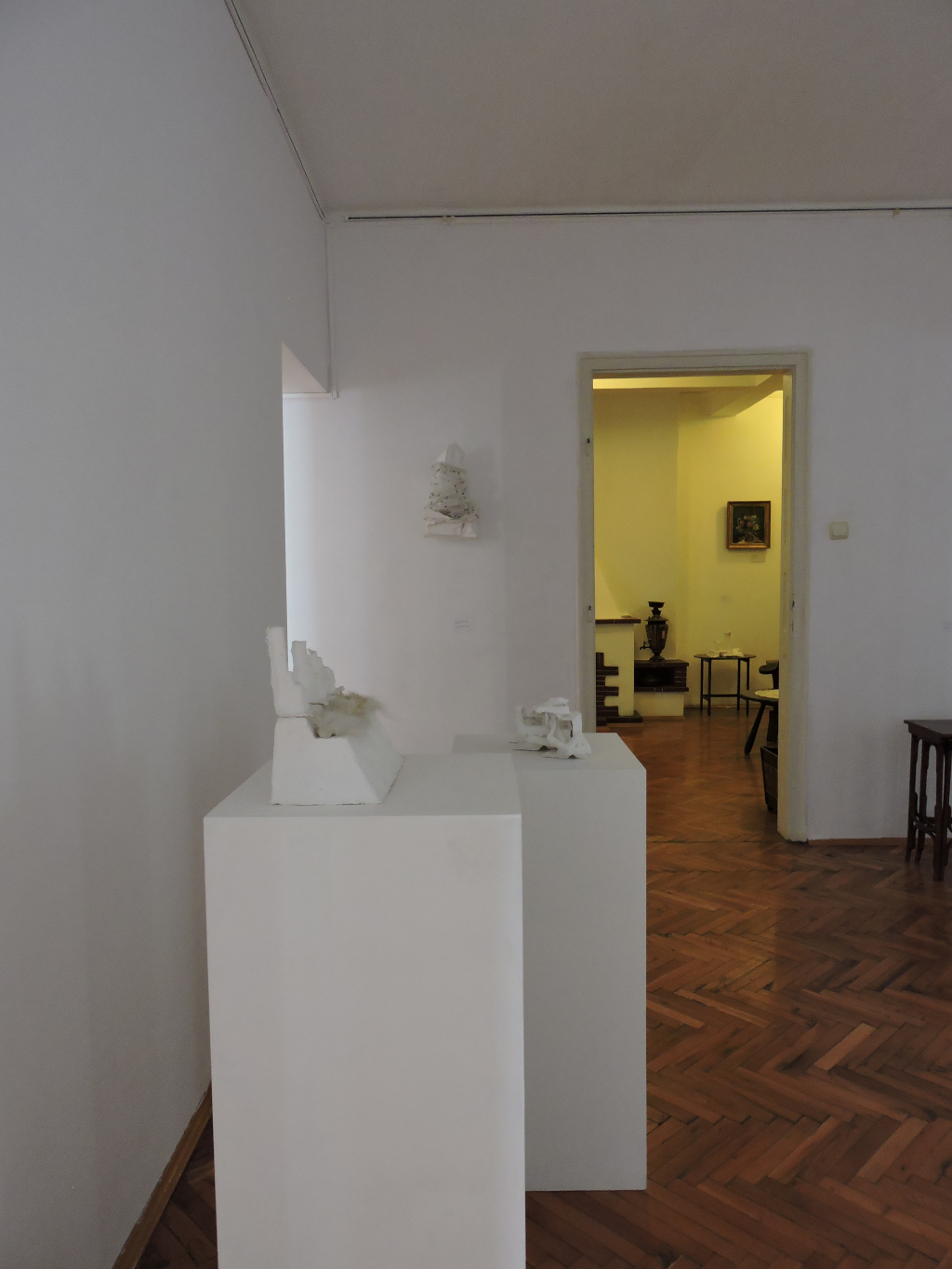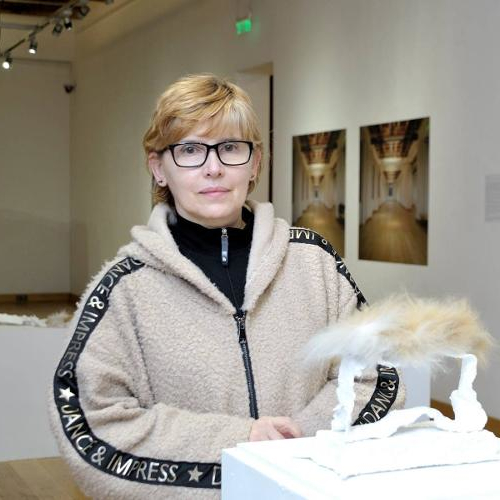
I can divide the components into two groups. One are those that are determined by the external environment - these are the impressions of what is seen and heard. My conscious mind, or perhaps subconscious or intuition, processes the information, selects what seems important to it at a particular moment, and looks for parallels between images and events. I am interested in the world, in its dynamics. The others are the means of expression that I use according to my education in sculpture and my attitude. They can be forms I model, found objects I try to transform beyond recognition, or a combination of both. Sometimes I look for solutions that incorporate both volumetric and linear elements. I find it interesting to work with fragments and tend to create images (in the most general sense of the term) that carry a dynamic. Lately I have been building my works by combining materials that have different structure and color.
If we talk about placing a project in a space, the best case is when the artist has chosen the space or knows it well in advance. When I think about intervening in a space, whether it is open or closed, I am not only concerned with its geometrical characteristics. It is more important to define its context - where it is located, what its history is, its function, how it is present in the public's mind, and what I am concerned with. All this gives me the key to positioning. If we are talking, however, about how a project, through its elements, creates a space that, as a carrier of a certain meaning, impacts on the senses and thought of the audience, then, as I work with three-dimensional elements, I think about the characterization of these elements and the meaningful and formal connections between them. I look for juxtapositions or oppositions through their themes and their dispositions to one another in an effort to construct a narrative.
When I start working on an image, a narrative is going on in my mind that is not linear and cannot be characterized as text. This narrative guides me, and when I feel myself straying and going in a direction that takes me away from the image I am trying to achieve, I try to recover my idea by recalling the original narrative and reliving the creative power of the impulse. The text written to an image already created, with its linearity, gives a new existence to the image, which is on a linguistic level. However, does this not affect the multilayeredness of the image, which in visual art exists on a sensory level.
I hope the audience will find meaning in what I have tried to share. I want the viewer to find something interesting in the works that will keep their eyes on them, to remember them.
Contemporary art interprets and comments on reality through various narratives. Research, such as the observation of topoi or a time period, for example, puts a topic in context, finds or creates connections, sometimes unexpected, between events and phenomena, and helps to make a narrative convincing.